Load review
We check voltage, current, wattage margin, fixture grouping, cable distance, and ambient temperature before recommending a product family.
Specification services
Mean Well supports project teams that cannot afford vague component answers. Our service model starts with the electrical requirement, then follows the installation context, certificate path, and delivery schedule until the recommended lighting controls platform is clear enough for submittal. For OEM luminaires, commercial retrofits, and facility upgrades, the aim is to reduce avoidable redesign before orders are released.
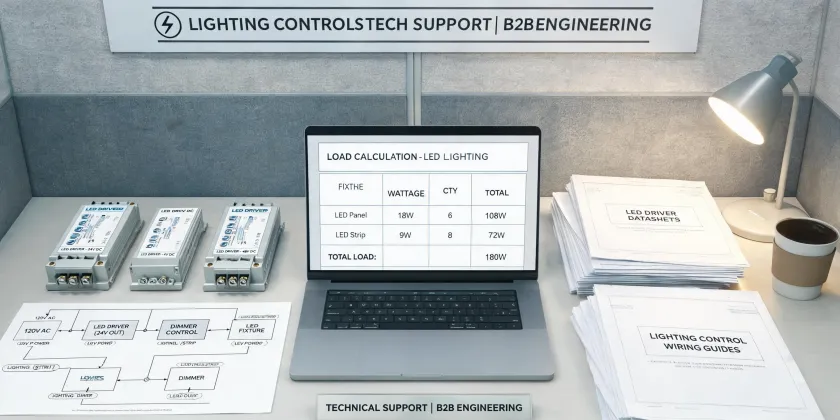
We check voltage, current, wattage margin, fixture grouping, cable distance, and ambient temperature before recommending a product family.
DALI, 0-10V, PWM, occupancy sensor, and emergency mode assumptions are documented so controls teams and installers work from the same basis.
Datasheets, certificates, installation notes, and packaging references are organized into a practical file for procurement and inspection.
Send fixture type, load data, dimming intent, enclosure condition, and target market certificates.
We shortlist driver or power supply ranges and call out thermal, wiring, and protocol tradeoffs.
Engineering and purchasing teams receive the reference material needed for quotation and customer approval.
Lead time, substitution rules, batch labels, and revision notes are aligned before repeat orders begin.
Every recommendation is framed around what the driver must do in the field, not only what appears in a model number. That helps project managers compare alternatives, communicate risk, and avoid late substitutions that break approvals.
Service CTA
Include load range, dimming protocol, certification market, installation temperature, and quantity bands. Our response will focus on a documented shortlist and the questions still blocking release.
Engineering request
Share voltage, dimming protocol, enclosure, certificate, and schedule requirements. A Mean Well application specialist will respond with a structured recommendation.